
Table of Contents
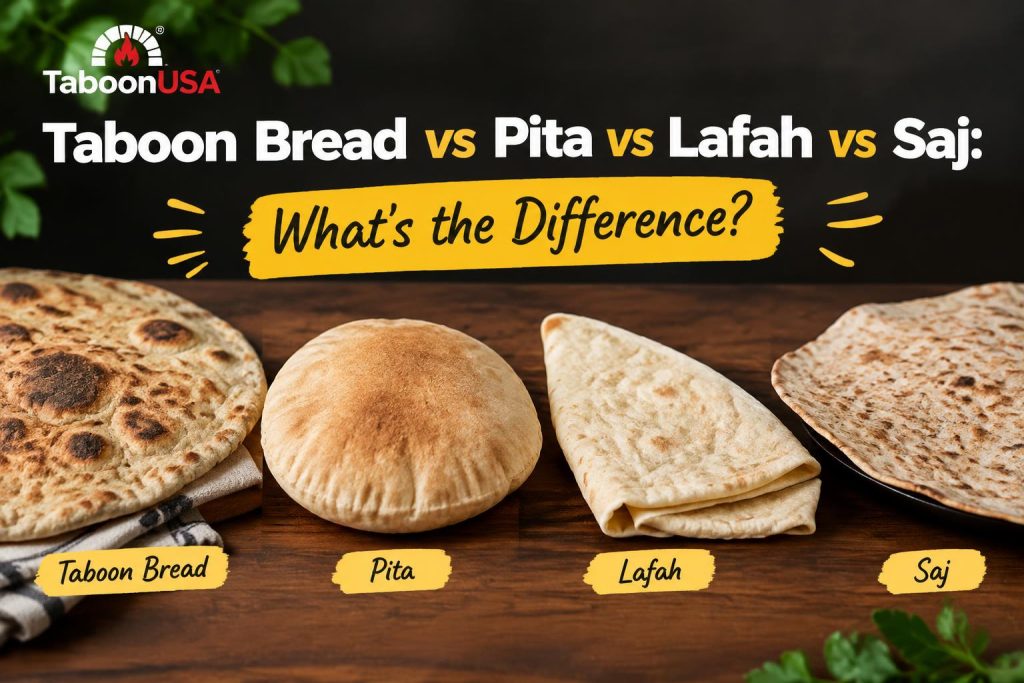
Walk into any Middle Eastern kitchen, and you will see stacks of warm bread on the counter. Some pieces look thick and chewy. Others look paper-thin, like a soft sheet of cloth. A few puff up into a pocket. Many people call all of them “pita,” but each type has its own name, its own cooking method, and its own job at the table.
We cook and serve this food every day, so we get asked about the difference between taboon bread, pita, lafah, and saj all the time.
In this guide, we break down each flatbread in simple words, compare taboon bread vs pita side by side, and help you pick the right one for your next meal.
Why Middle Eastern Bread Matters
Bread is the heart of Middle Eastern cuisine. It works as a plate, a spoon, and a wrap, all at once. People tear it to scoop hummus, wrap it around grilled meat, or use it to soak up every drop of sauce. Bread also carries deep cultural meaning. Families share it at the table, bakers make it fresh each morning, and many communities treat it as a sign of welcome and respect.
Because the region is so diverse, each country and even each village has its own style. That is why one bread can have three or four names. The four we cover here are the ones you will meet most often on a menu: taboon, pita, lafah, and saj.
Types of Middle Eastern Flatbread
| Bread | Texture | Thickness | How we cook it | Best for |
|---|---|---|---|---|
| Taboon | Soft, chewy, a little crisp at the edges | Medium to thick | Baked on the wall or floor of a hot clay oven | Dipping, roast chicken, sharing |
| Pita | Soft, fluffy, often with a pocket | Medium | Baked at very high heat so it puffs | Stuffing, scooping, sandwiches |
| Lafah | Soft, stretchy, pliable | Medium, large and wide | Baked in a hot oven, often a taboon | Wraps, shawarma, grilled meat |
| Saj | Paper-thin, light, slightly blistered | Very thin | Cooked in seconds on a domed metal griddle | Rolled wraps, labneh, za’atar |
Names and methods change from region to region, so you may see small differences from one kitchen to the next. Still, this table gives you a clear starting point.
What Is Taboon Bread?
Taboon bread (also spelled tabun or taboun) gets its name from the oven it bakes in. A taboon is a traditional clay oven. Bakers heat it until it glows, then press the dough against its hot surface. In many homes and villages, the oven floor holds small stones or pebbles that spread the heat evenly.
The result is a soft, chewy flatbread with golden spots and a lightly crisp edge. It has a rich, toasty flavor that you can taste right away. Taboon bread is a staple of Palestinian and wider Levantine cooking, and it plays a starring role in dishes where the bread soaks up juices, olive oil, and spices. If you want the full story behind it, we cover the history and a home recipe in our guide on what taboon bread is.
What Goes Into Taboon Bread?
The ingredient list is simple:
- Flour
- Water
- Salt
- Yeast
- A little oil or sometimes a touch of sugar
Because the recipe is so short, the cook’s skill and the oven do most of the work. That is why a taboon loaf tastes so different from a plain bread made in a regular oven.
What Is Pita?
Pita is the bread most people know. It is round, soft, and often has a hollow pocket inside. Bakers cook it at very high heat for a short time. The steam inside the dough pushes the layers apart, and the bread puffs up like a balloon. As it cools, it settles into a soft pocket you can open and fill.
Pita travels well, which is why it spread across the Mediterranean and into many other countries. You can stuff it with falafel, grilled meat, or salad, or cut it into wedges and serve it with dips. Pita is also very versatile, so it shows up at breakfast, lunch, and dinner.
What Is Lafah?
Lafah (also written laffa or lafa) is a large, soft, and stretchy flatbread. The word comes from an Arabic root that means “to wrap,” and that tells you its main job. Lafah is wide and pliable, so it folds around fillings without tearing.
Many cooks bake lafah in a taboon or a similar hot oven. It is thicker than saj but softer and more flexible than a typical pita. People love it for wraps because it holds a lot of filling and stays warm and tender.
You can taste this style on our menu. Our Taboon Lafah Shawarma wraps seasoned meat in warm bread, then tops it with fresh vegetables and sauce. We built the dish around the idea that a good wrap needs bread that is both soft and strong.
What Is Saj Bread?
Saj bread (also called markouk) is the thinnest of the four. Cooks stretch a ball of dough until it is paper-thin, then throw it over a saj, which is a large, domed metal griddle heated from below. The bread cooks in under a minute and comes off with light brown blisters.
Because saj is so thin, it feels almost like a soft sheet of paper. People tear it, roll it, or fold it around labneh, olives, za’atar, cheese, or grilled meat. It is light and easy to eat, and it is common in Lebanese, Syrian, and Palestinian homes.
Taboon Bread vs Pita: What Is the Difference?
This is the question we hear most, so we want to answer it clearly.
- Shape and thickness: Taboon bread is usually thicker and more rustic. Pita is thinner and neater, with a pocket.
- Texture: Taboon is chewy and a bit crisp at the edges. Pita is soft and fluffy.
- Cooking method: Taboon bakes in a clay oven with intense, even heat. Pita bakes quickly at high heat so it puffs.
- Use: Taboon works best for tearing, dipping, and serving with roast dishes. Pita works best for stuffing and scooping.
- Flavor: Taboon has a deeper, smoky, toasted taste. Pita has a milder taste.
In short, taboon bread vs pita comes down to oven, texture, and purpose. Pita is the easy everyday choice, while taboon feels more like a special tradition.
Lafah vs Saj: How Do They Compare?
Both breads work well as wraps, but they feel very different in your hands.
- Lafah is thicker, softer, and chewier. It holds heavy fillings, so it suits shawarma and grilled meat.
- Saj is thin and light. It suits smaller rolls with simple fillings like cheese, herbs, or labneh.
If you want a hearty, filling meal, pick lafah. If you want something light and quick, pick saj.
Which Flatbread Should You Choose?
Use this simple guide when you order or cook at home.
- You want a pocket for falafel or salad: Choose pita.
- You want to dip in hummus or serve with roast chicken: Choose taboon.
- You want a big wrap with shawarma: Choose lafah.
- You want a thin, light roll with cheese or za’atar: Choose saj.
- You want to share a table of grilled food: Serve a mix. A table with warm bread, grilled meat, and dips is the best way to enjoy the culture of the region. We explain how that works in our post on what a Mediterranean grilled platter is.
What to Serve With Each Bread
Bread tastes best with the right partner. Here are some ideas we love.
- Taboon: Roast chicken with onions and sumac, olive oil, hummus, and pickles.
- Pita: Falafel, grilled vegetables, tzatziki and fresh salad.
- Lafah: Chicken or beef shawarma, garlic sauce, tomatoes and pickled turnips. If you are comparing meat wraps, our guide on shawarma vs gyro shows how the fillings differ.
- Saj: Labneh with olives, za’atar with olive oil, or a simple cheese roll.
You can top any of these breads with fresh herbs, tahini, yogurt sauce, or spicy chili paste. A good topping adds contrast, so each bite feels full and balanced.
How Do Cooks Season and Cook Each Bread?
Most doughs start with the same ingredients, but small choices make a big difference.
- Mix and rest. We combine flour, water, salt, and yeast, then let the dough rise until it feels soft and airy.
- Shape. For taboon and lafah, we stretch the dough into a wide round. For saj, we stretch it paper-thin. For pita, we roll it into an even disc.
- Cook. Each bread meets a different kind of heat: a clay oven for taboon, a very hot oven for pita, a domed griddle for saj.
- Season and serve. Some cooks brush the bread with olive oil, sprinkle it with za’atar or sesame, or serve it plain and warm.
Heat and timing matter most. Too little heat makes the bread dry, and too much can burn it before it cooks through.
Do These Breads Nourish You?
Bread is a comfort food, and it also gives you energy. Flatbread supplies carbohydrates, and when you pair it with lean meat, beans, vegetables, and yogurt, you get a balanced meal. Many guests tell us they like Mediterranean food because it feels filling without feeling heavy. Portion size and toppings make the real difference, so we suggest building your plate with plenty of protein and fresh vegetables.
Where to Try These Breads in Dallas
If you want to taste the difference yourself, we invite you to visit us. At Taboon Mediterranean Grill in Dallas, we serve warm bread alongside grilled kebabs, shawarma, rice bowls, and fresh salads. You can see everything we offer on our menu.
We cook our food with care, and we treat bread as the heart of the meal, not an afterthought. Come hungry, tear a piece of warm bread, and taste why this tradition has lasted for centuries.
Frequently Asked Questions
Is taboon bread the same as pita?
No. Both are flatbreads, but taboon bread bakes in a clay oven and comes out thicker and chewier. Pita bakes quickly at high heat and often puffs into a pocket.
Is lafah the same as taboon bread?
They are closely related. Many cooks bake lafah in a taboon oven, so the two can look alike. Lafah is usually larger and more flexible, which makes it ideal for wraps.
Is saj bread the same as lavash?
They are similar, but not identical. Both are very thin, but regional names and methods differ. Saj bread gets its name from the domed griddle that cooks it.
Which bread is best for shawarma?
Lafah is a great choice for shawarma because it is soft, wide and strong enough to hold the filling. Thin saj and pita also work, depending on the style you like.
Can I make these breads at home?
Yes. You can bake a taboon-style loaf on a hot pizza stone or cast iron pan, and you can cook saj-style bread on an upside-down wok or skillet. The results will differ from a real clay oven, but they still taste great.
Which Middle Eastern bread is the healthiest?
No single bread wins. Whole wheat versions add fiber, and portion size matters most. Pair any flatbread with lean protein and vegetables for a balanced meal.
Final Thoughts
Taboon bread, pita, lafah, and saj each bring something different to the table. Taboon gives you chew and smoky flavor, pita gives you a handy pocket, lafah gives you a soft wrap, and saj gives you a thin, light roll. Once you know the difference, you can order with confidence and enjoy every bite more.
We would love to serve you the next time you are in Dallas. Visit Taboon Mediterranean Grill, pick your favorite bread, and taste the tradition for yourself.